Decoding Skin Architecture: Clearing Deep Acne Scars & Melasma with the PICO Laser Program by Dr. Poom, Go & Grow Clinic Pattaya

Updated: Aug 20

Hello everyone, I'm Dr. Poom (Dr. Chirat Sukmee, License No. 59894), the physician at Go & Grow Clinic in Pattaya.
If you're taking the time to read this article, I believe you may be one of the many people facing an invisible "wall of confidence" — a wall built from marks on the face, whether it's acne scars that leave the skin looking like the surface of the moon, or deep dermal melasma that casts a shadow over your natural glow.
Throughout my years treating patients at our clinic in Pattaya, I've heard countless stories of frustration. Some are senior executives with remarkable talent who avoid eye contact in the boardroom simply because they're self-conscious about their skin. Others have spent a small fortune on department-store skincare, only to see little to no result — because skincare, in reality, is like polishing the paintwork of a car: it can only reach the outermost surface. Acne scars and deep melasma, on the other hand, are problems rooted in the "foundation and structural pillars" beneath.
In this masterclass-level article, I'll take you beneath the surface of your skin to understand exactly how these problems form at a cellular level, and introduce you to one of the most advanced innovations of our time: the PICO Laser Program — not just another laser treatment, but what I like to call "optical surgery," reshaping skin structure with light.
Get ready for an in-depth medical breakdown, simplified so you can make the best decision for the canvas of your life — your skin.
Chapter 1: Decoding Skin Architecture — Why Acne Scars Run Deep and Melasma Won't Fade

Before we can repair anything, we first need to understand its architecture. Our skin is made up of two key layers: the epidermis, which acts like the roof of a house, and the dermis — the structural pillars packed with collagen and elastin that hold everything up.
The Problem With Acne Scars: A Collapsed Structure
When severe acne becomes inflamed, the body sends white blood cells to fight off bacteria — but in the process, the surrounding collagen structure gets damaged too. As the acne heals, the body attempts to repair itself, but often does so imperfectly, forming a tight, fibrous band that pulls the surface layer downward, creating a scar. Clinically, acne scars fall into a few main categories:
Ice Pick Scars: Narrow but deep, reaching all the way into the lower dermis. The hardest type to treat — like a needle punched through the floor.
Boxcar Scars: Wide with sharply defined edges, resembling a box — like a tire mark pressed into mud.
Rolling Scars: Broad and shallow with soft, rounded edges, giving the skin a wavy texture caused by fibrous bands pulling across a wide, flat area.
The Problem With Deep Melasma: A Pigment Factory Gone Rogue
Melasma isn't just a surface stain. It originates from melanocytes — the pigment-producing cells that act like a "factory" — being aggressively triggered by UV exposure, hormones, or heat, causing them to overproduce melanin. Worse still, in deep melasma cases, these pigment particles fall through the skin's basement membrane and settle in the dermis, a layer that ordinary topical creams simply cannot reach.
Chapter 2: Busting the Myths — Treatments That Make Things Worse

Many patients come to consult me about acne scar treatment in Pattaya or laser treatment for melasma, dark spots, and pigmentation, with skin that's been damaged by the wrong approach. Here are the myths you need to let go of immediately.
Myth 1: Applying concentrated acid-based creams (AHA/BHA) will make acne scars shallower.
The Medical Truth: These acids only exfoliate the epidermis. They cannot penetrate deep enough to cut fibrous bands or stimulate deep collagen production. Overusing acids thins the skin, damages the skin barrier, increases sun sensitivity, and can actually make melasma darker.
Myth 2: Frequent microdermabrasion will smooth out the skin.
The Medical Truth: Crystal microdermabrasion is an outdated technology that causes significant mechanical trauma to the upper skin layer, leading to chronic inflammation — and can actually trigger the pigment factory to work harder, resulting in post-inflammatory hyperpigmentation (PIH).
Real treatment has to address the problem "underground," without damaging the "surface layer" above.
Chapter 3: Laser at the Speed of a Trillionth of a Second — The Energy That Changed Medicine

This is where science crosses a real boundary. In the past, we relied on Q-Switched or IPL lasers, which use thermal energy (the photothermal effect) to break down pigment — often followed by burning sensations, swelling, redness, and long downtime.
But the PICO Laser Program is a genuine revolution. "Pico" stands for picosecond — one-trillionth of a second. At that speed, the energy delivered by the laser shifts from thermal energy into mechanical energy (the photoacoustic effect) — like a sound wave shattering a rock into fine particles.
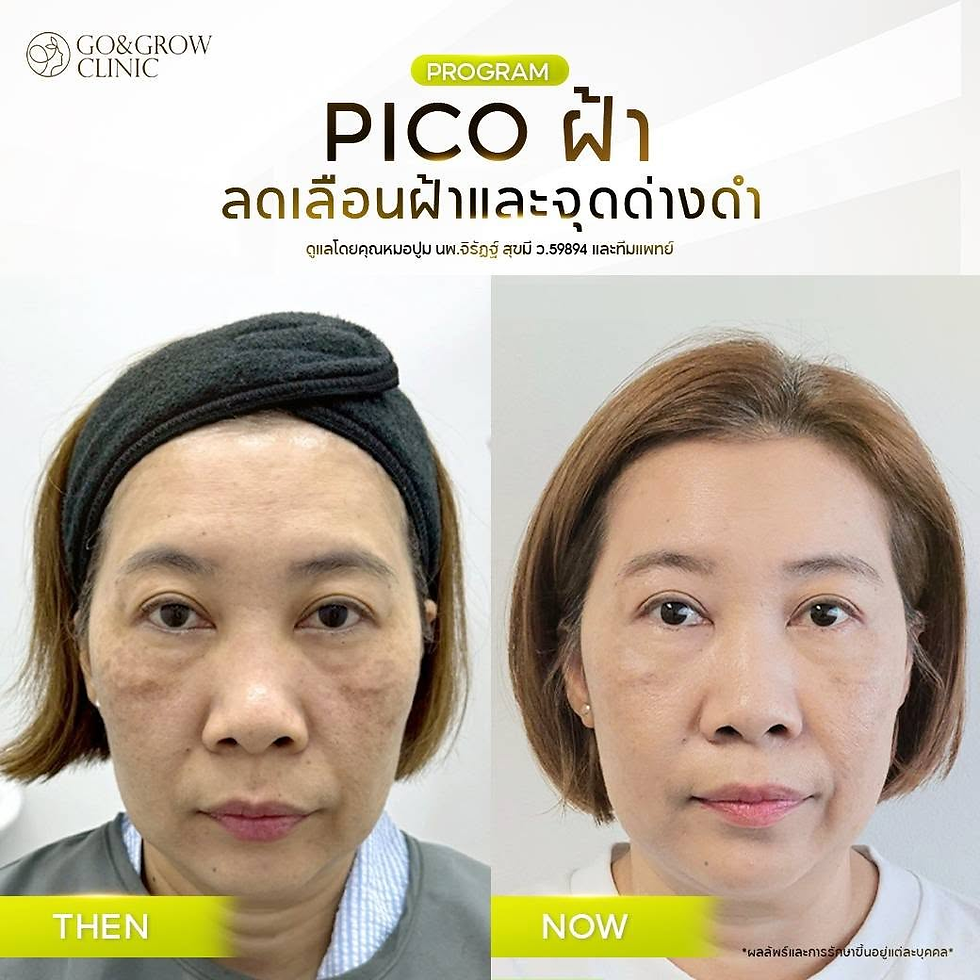
Destroy Pigments: PICO energy strikes clumped melanin particles directly, shattering them into microscopic dust — without generating heat buildup in the surrounding skin. White blood cells (macrophages) then gradually clear away these fine particles through the body's natural process.
LIOB Technology: For acne scar treatment, a specialized fractional handpiece with a micro lens array is used. The compressed energy triggers Laser-Induced Optical Breakdown (LIOB), creating tiny cavities beneath the dermis while the top layer of skin remains completely intact. The body then mobilizes stem cells and growth factors to rebuild new collagen and elastin. The result: skin is lifted from below, acne scars become shallower, pores tighten — all without any visible wounds on the surface.
Chapter 4: Dr. Poom's Signature, Personalized Energy Protocol

A great tool is like a fine paintbrush — but the final artwork depends entirely on the hand and expertise of the artist. For the PICO Laser Program at our Pattaya clinic, I never use a one-size-fits-all setting. Instead, I use real-time customization based on careful assessment.
The Depth Analysis: Before treatment, I assess the type of melasma (superficial / deep / mixed) and the type of acne scar, in order to select the appropriate wavelength — for example, 1064nm for dermal melasma, and 532nm for superficial pigment and freckles.
The Combination Protocol: For severe rolling scars, I use subcision (a blunt needle technique to release the fibrous bands beneath the scar) first, releasing the tension pulling the skin down. This is followed by PICO Fractional Laser to further stimulate collagen production.
The Pinkish Endpoint: I carefully control the treatment until reaching a precise clinical endpoint — aiming for a light pink flush without excessive bleeding beneath the skin — to minimize downtime and help patients return to daily life as quickly as possible.
Chapter 5: From Sales Director to Absolute Confidence

A well-known psychological principle called the "Halo Effect" tells us that people inevitably judge credibility and professionalism based on first impressions.
One of my patients, whom we'll call Mark, is a Sales Director at a major multinational company in Pattaya. He's highly capable, but struggled with severe acne scarring and post-inflammatory dark marks left over from steroid-induced acne in his teenage years. He once told me:
Doctor, whenever I'm presenting a deal worth tens of millions, I constantly feel like clients are staring at my acne scars instead of the numbers on the screen. It completely undermines my confidence — I can't even hold eye contact properly.
We began rebuilding Mark's skin structure with a continuous PICO Laser Program combined with subcision.
Week One: Dark marks and pigmentation visibly faded; skin appeared noticeably brighter.
Month Three: Neocollagenesis was in full effect — boxcar scars gradually filled in and became shallower, and once-enlarged pores began to tighten.
Month Six: Skin texture was over 80% smoother.
What changed wasn't just his face — it was his posture and his aura of confidence. Mark came back with a wider smile, stronger eye contact, and sales numbers that soared. This is a clear example that aesthetic medicine isn't just about surface-level beauty — it's about unlocking a person's true potential.
Chapter 6: Clearing Up Every Question With Dr. Poom

Q: Will PICO Laser make my skin thinner or more sensitive to sunlight?
Dr. Poom: Absolutely not — in fact, it does the opposite. PICO's LIOB technology stimulates the dermis to produce more collagen and elastin, essentially reinforcing the structural pillars of your skin. The result is denser, stronger skin that's actually more resilient against pollution and sun exposure than before.
Q: Is it painful? And how long is the downtime?
Dr. Poom: We apply premium-grade numbing cream and leave it on for about 45 minutes before treatment. During the procedure, you'll only feel a warm sensation, similar to a gentle rubber-band snap. For brightening treatments, the skin will look lightly flushed pink for just 2-3 hours. For fractional treatment of acne scars, you may see small pinpoint marks that fade naturally within 3-5 days, and makeup can be applied as usual.
Q: How many PICO Laser sessions are needed to completely cure melasma?
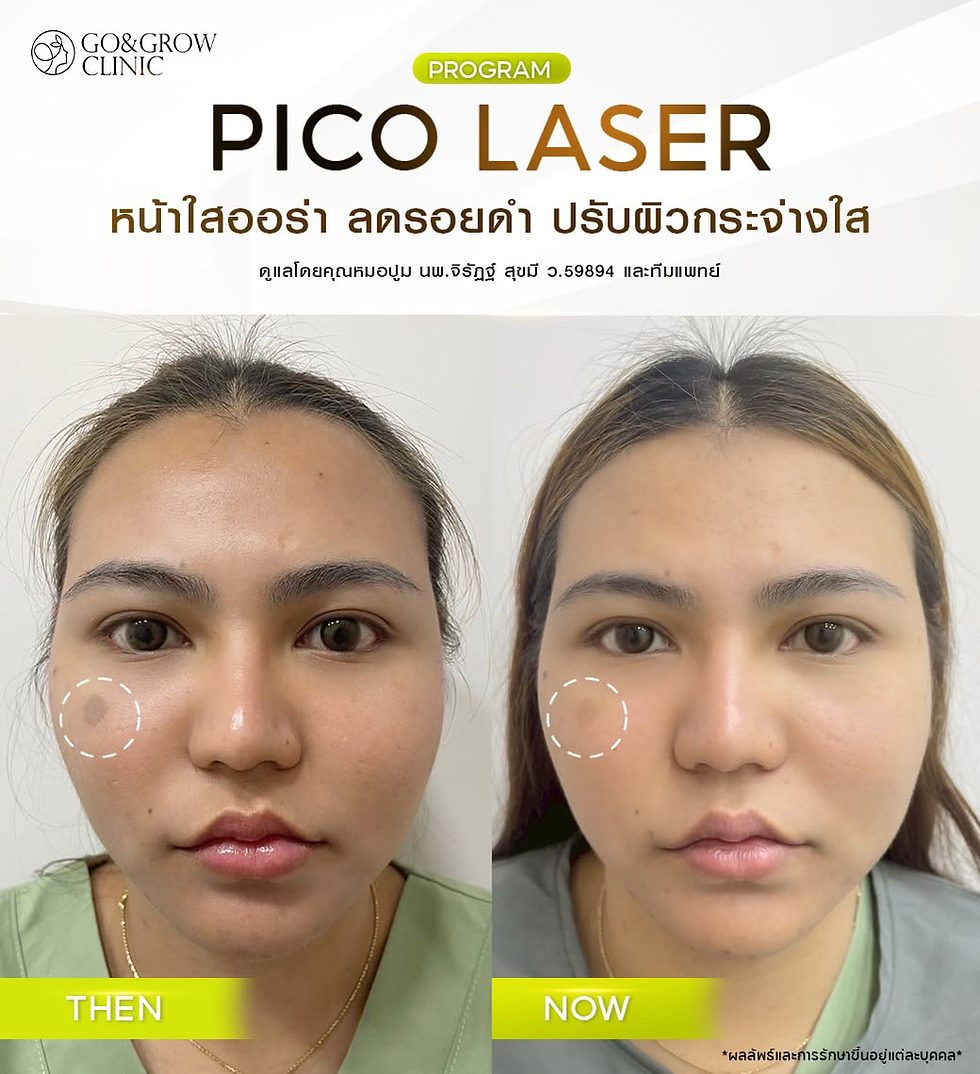
Dr. Poom: To be honest, melasma cannot be cured 100%, since triggering factors like genetics and UV exposure remain a part of life. However, the PICO Laser Program can fade pigmentation by as much as 70-90%, to the point where it's barely visible to the naked eye. Most patients see clear improvement starting from the 3rd to 5th session, especially when combined with consistent daily sunscreen use.
Conclusion: A New Canvas, Defined by You

Treating acne scars and deep melasma isn't overnight magic — it's a journey shared between advanced medical science and the expertise of the physician performing the treatment.
Don't let imperfections on your skin limit your growth, your career, or your happiness in life. Physical scars can be treated, and as they fade, the emotional scars tend to heal along with them.
Your skin is one of the most valuable canvases of your life. It's time to bring back smoothness, radiance, and the aura of true confidence.
Ready to rebuild your skin's architecture and create a flawless new canvas together? I'm Dr. Poom, and my team is ready to listen, thoroughly assess your skin's structure, and design a tailor-made PICO Laser Program just for you. Book a consultation directly with me — with no obligation.
Dr. Chirat Sukmee, License No. 59894 (Board-Certified Specialist)
Start restoring smooth, radiant skin — consult Dr. Poom at Go & Grow Clinic through:
Phone: 064-269-9522
LINE Official: Click to add and consult Dr. Poom
Facebook Fanpage: Go and Grow Clinic
Instagram: @go_growclinic
Related Go & Grow Resources
Explore related resources: Read the Thai edition · facial ageing and treatment selection · Thailand medical tourism


Comments