Destroy Fibrosis: An In-Depth Look at the Art of Subcision for Acne Scars — Program Subcision: Restoring the Skin’s Surface for Smoother, More Refined Texture


Hello everyone. I’m Dr. Poom (Dr. Chirat Sukme, Medical License No. 59894), founder of Go & Grow Clinic in Pattaya.
If you are reading this article, you may be one of many people who quietly struggle every time you stand in front of a mirror, or when overhead lighting hits the side of your face and reveals uneven texture, depressions, and deep indentations across the cheeks that are difficult to conceal. Many people try expensive skincare products, exfoliation programs, or multiple laser treatments, yet the result may still fall short of expectations, and the acne scars may remain deeply indented.
"Why, no matter how much I treat them, do my acne scars still refuse to become shallower?" This is a question rooted in both expectation and frustration that many patients bring to my consultation room.
To make the concept easier to visualize, think of our skin as a "canvas"—a surface that we want to remain smooth, firm, and evenly reflective. When severe inflammation from acne develops beneath the skin, the body activates a wound-healing response. However, the healing process may also create dense fibrotic tethers that pull the upper skin surface downward and anchor it to deeper tissue, much like an anchor rope holding a canvas in place.
When fibrous bands continue to pull from below, trying to "iron" the surface from above with skincare or energy-based treatments may not fully address the underlying tethering. The fibrous attachment may need to be released directly, which is the rationale behind Subcision as a technique for releasing acne-scar tethering.
In this Pocketbook Style and Ultimate Masterclass edition, I, Dr. Poom, will take you deeper into scar anatomy, the mechanisms of subcutaneous fibrosis, and the medical technique of Program Subcision. The goal is to provide a clearer framework for understanding deep acne-scar treatment, particularly for people searching for acne-scar Subcision in Pattaya and looking for an individualized approach to improving skin texture and confidence.
Chapter 1: Anatomy & Problem Mechanics — Understanding Subcutaneous Fibrotic Tethering (The Pathophysiology of Fibrosis)

To address the problem appropriately, we first need to understand acne-scar mechanics at the anatomical level.
Human skin consists of three major layers: the epidermis, dermis, and subcutis/subcutaneous tissue. When severe acne vulgaris develops, inflammatory activity can trigger an immune response that contributes to tissue injury, including disruption of collagen and elastin structures within the dermis.
As inflammation settles, the body initiates tissue repair. The resulting connective tissue may become disorganized and fibrotic, forming dense bands that can tether the skin surface downward. These bands are commonly described as fibrotic tethers or fibrosis.
[ Epidermis ] ---> Uneven, depressed surface contour
[ Dermis ] ---> Disruption of the original collagen structure
[ Fibrosis Tethers ] ---> Pull the skin surface downward toward deeper tissue
[ Subcutis / Subcutaneous Tissue ] ---> Firm attachment to deeper tissue
Medical Assessment of Acne-Scar Severity (The Goodman and Baron Scar Grading System)
In dermatologic practice, acne-scar severity can be assessed using standardized grading systems to help guide treatment planning:
Grade 1 (Erythematous / Macular): Early-stage scar changes, with redness or pigmentation while the skin surface remains relatively smooth.
Grade 2 (Mild Atrophic): Mild atrophic scarring that is more visible at close range but may be concealed relatively easily with makeup or skin stretching.
Grade 3 (Moderate Atrophic): Moderate atrophic scarring that is clearly visible under normal lighting at a distance of about 1 meter or more and may flatten when the skin is stretched.
Grade 4 (Severe Atrophic / Tethered Scars): Severe atrophic scars with dense underlying tethering that does not readily flatten even when the skin is stretched.
Acne-Scar Morphology and Its Relationship to Fibrotic Tethering
Acne scars do not all have the same morphology. Three major patterns are commonly described, and they may require different treatment strategies:
Rolling Scar: Broad, rounded depressions with relatively shallow depth, commonly associated with fibrotic tethering in the dermis and subcutis. This morphology may respond particularly well to Subcision.
Boxcar Scar: Shallow or deep depressions with sharply defined, relatively vertical edges. They may reflect collagen loss with variable degrees of underlying tethering.
Icepick Scar: Narrow, deep depressions extending into the deeper dermis. These scars may require focal techniques such as CROSS Technique together with treatment directed at any associated tethering.
Chapter 2: Myth-Busting — Four Common Misconceptions About Acne-Scar Treatment
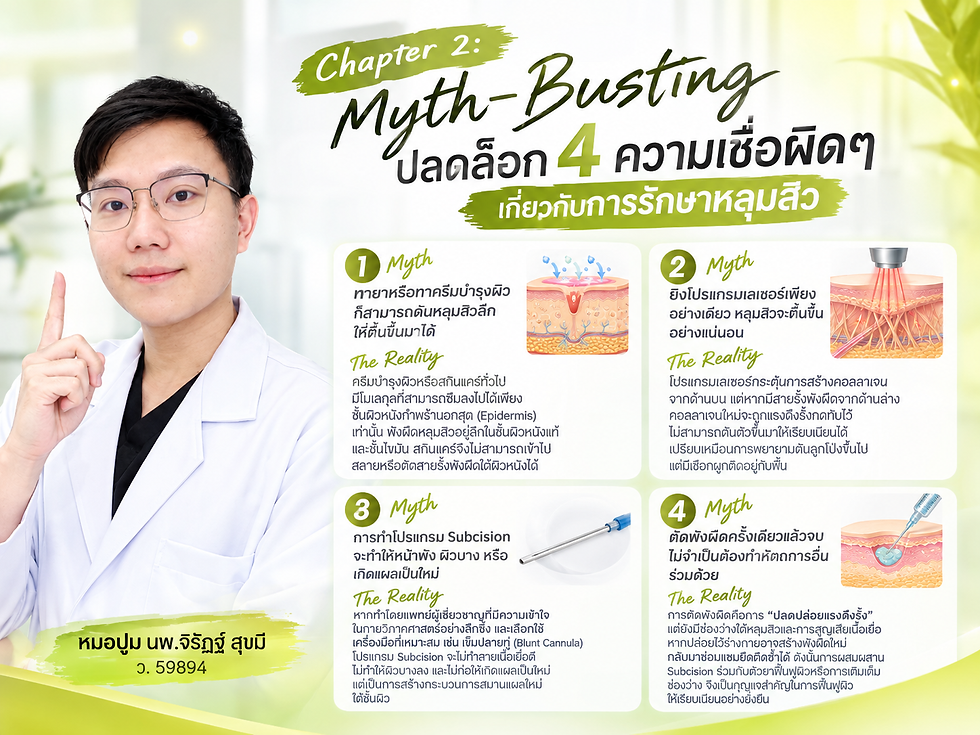
Throughout my experience treating patients seeking Acne scar treatment in Pattaya, I have encountered many misconceptions about acne scars. These misunderstandings can lead to repeated treatments without adequately addressing the underlying scar morphology.
Myth 1: Skincare alone can push deep acne scars back up
The Reality: Most topical skincare primarily acts within the superficial skin layers, while deeper fibrotic tethering may be located within the dermis and subcutis. Skincare therefore cannot mechanically release or cut deep fibrotic bands.
Myth 2: A laser program alone will definitely make acne scars shallower
The Reality: Laser treatments such as fractional CO2 or picosecond laser may stimulate collagen remodeling from the surface. However, when a scar is mechanically tethered from below, surface remodeling alone may not fully address the underlying downward pull. It is similar to trying to lift a balloon while a rope remains tied to the ground.
Myth 3: Subcision will damage the face, thin the skin, or create new scars
The Reality: When performed by a physician with appropriate anatomical knowledge and with suitable instruments such as a blunt cannula, Subcision is intended to release tethering beneath the skin rather than remove healthy surface tissue. Technique, anatomy, patient selection, and aftercare all influence safety and outcomes.
Myth 4: One Subcision session is enough and no other treatment is needed
The Reality: Subcision addresses the mechanical tethering component, but the subdermal space and residual tissue changes may remain. Depending on scar morphology, combining Subcision with tissue-supporting or resurfacing approaches may be considered as part of a multimodal treatment plan.
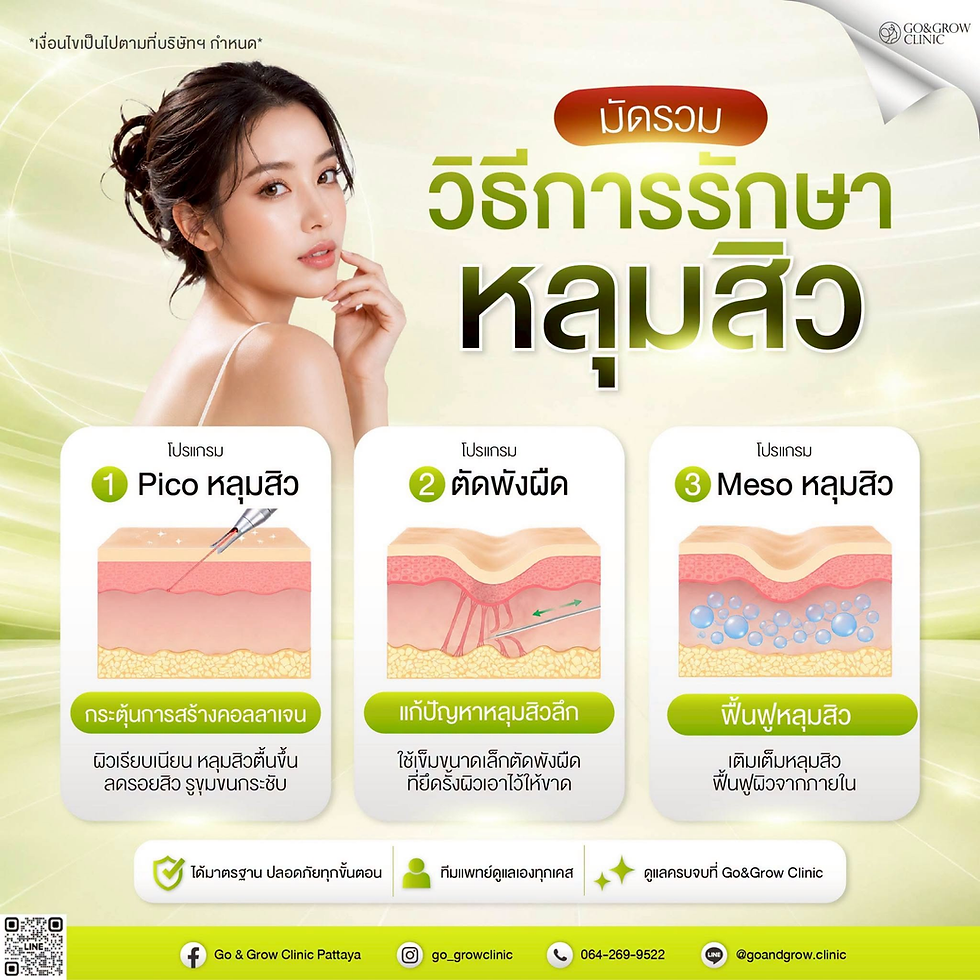
Chapter 3: Innovation & Mechanism — Understanding Program Subcision and Cannula Subcision

The term Subcision comes from Subcutaneous Incision and refers to a minor procedure performed beneath the skin to release fibrotic tethering. A medical instrument is introduced beneath the dermis or within the subcutaneous plane and moved parallel to the skin surface to release fibrotic bands.
Comparing Instruments: Nokor Needle vs. Blunt Cannula
Modern Subcision techniques have evolved, with instrument selection intended to improve control and patient comfort:
Feature | Nokor Needle (Traditional Technique) | Blunt Cannula (Blunt-Tip Technique) |
Tip design | Triangular sharp cutting tip | Rounded, non-cutting blunt tip |
Vascular / nerve considerations | Sharp instruments may carry a higher risk of vessel injury and bleeding | The blunt tip is designed to follow tissue planes and may reduce the likelihood of direct vessel or nerve injury |
Tissue trauma and bruising | May be associated with more bruising and longer recovery | May be associated with less bruising and faster recovery in appropriate cases |
Treatment coverage | More limited coverage per insertion | Can allow broader sweeping coverage from a small entry point |
Comfort during treatment | May be more uncomfortable | May be more comfortable for many patients |
[ Blunt Cannula Technique ]
---> The cannula enters through a small access point
---> The blunt tip follows the tissue plane and helps avoid direct cutting of vessels
---> Fibrotic bands are released with controlled sweeping movements parallel to the skin
The Three-Stage Healing Mechanism of Program Subcision (The Tri-Action Healing Mechanism)
Release Fibrotic Tension: Fibrotic bands are released, reducing the downward mechanical tethering of the overlying skin.
Induce Controlled Hematoma & Cascade: A controlled local healing response may occur within the subdermal space, involving blood products, growth factors, inflammatory cells, and fibroblasts.
Neocollagenesis & Tissue Remodeling: Subsequent tissue remodeling and collagen synthesis may contribute to gradual improvement in skin texture over time.

Synergy Protocol: A Multimodal Approach to Acne-Scar Treatment
For deep acne-scar treatment, Subcision alone may not address every component of the scar. A multimodal strategy may therefore combine three key stages:
Destroy Fibrosis: Program Subcision using a blunt cannula to release deeper fibrotic tethering.
Rebuild & Scaffold: Tissue-supporting or regenerative injectable approaches may be considered to support the treated subdermal space and reduce the risk of re-tethering, such as Sculp / Radies (biostimulator), Reju (polynucleotide), or filler (hyaluronic acid), depending on clinical assessment.
Resurface Texture: Picosecond laser or microneedle RF may be considered to refine surface texture and address residual scar edges and pores.
Chapter 4: Case Study — From Acne Scars to Greater Confidence

As a physician, I do not view acne scars simply as a structural skin concern. Facial scarring can also affect emotional well-being, self-esteem, and confidence.
I would like to share the story of a 35-year-old senior executive who moved to Pattaya for work. He frequently met clients and presented major projects, but he often felt less confident under the spotlight in meeting rooms because of acne scars on both cheeks that had developed after inflammatory acne during adolescence. He felt that the uneven texture made his face appear tired and less smooth.
"Dr. Poom, I have tried to treat this for years. I spent a lot on creams and lasers, but when I look in the mirror in the morning, I still feel as if my face is a torn canvas. It makes me hesitant to look clients directly in the eye." This was what he told me during his first consultation.
Detailed assessment showed Rolling Scar and Boxcar Scar morphology with Goodman Grade 4 tethering. The treatment plan involved Program Subcision using a blunt cannula to release deeper tethering, combined with Sculptra as a collagen-stimulating approach to support the subdermal space, followed by Picosecond Laser to address the surface texture.
After a course of treatment, the patient began to notice visible changes. The cheek contours appeared more elevated and the skin texture became smoother and more natural, with the deeper depressions becoming less apparent.
As the skin became smoother, the patient described more than a physical change. He felt more comfortable making eye contact, his overall presentation improved, and he felt that the change positively affected his confidence at work.
Chapter 5: Step-by-Step Patient Journey — Treatment and Aftercare Following Program Subcision

To help patients understand the process and feel prepared, the clinic follows a structured treatment pathway:
1. The Comprehensive Assessment (Assessment with Dr. Poom)
Assess scar morphology and the extent of tethering using tangential lighting
Create an individualized treatment plan and vector mapping to guide the direction of scar release
2. Painless Preparation (Preparation for Comfort)
Apply topical anesthetic to the facial treatment area for approximately 45–60 minutes
Administer local anesthetic around the treatment area as appropriate to improve comfort during the procedure
3. Precision Subcision Procedure
Create a small access point using a sterile needle
Introduce the blunt cannula into the dermal/subcutaneous plane according to the planned vector map
Use controlled fan-shaped movements to release the fibrotic bands; a subtle snap sensation or sound may sometimes be perceived as tethering is released
4. Scaffold & Growth Factor Injection (Support of the Treated Space)
Where clinically appropriate, a biostimulator or regenerative injectable such as Rejuran may be placed in the treated subdermal space as part of the individualized plan
5. Post-Care Instructions & Recovery Timeline
First 24 hours: Avoid unnecessary touching or water exposure around the treated entry points and allow the treated area to remain clean and dry according to the physician’s instructions
Days 1–3: Use a cool compress if recommended to help with swelling and apply prescribed topical medication as directed
Days 4–7: Swelling and bruising generally continue to improve; light makeup may be resumed when the skin has recovered sufficiently
Weeks 2–4: Tissue remodeling continues and gradual changes in skin texture may become more apparent over time

Chapter 6: Comprehensive Q&A Section — Common Questions with Dr. Poom (Dr. Chirat Sukme, Medical License No. 59894)

Q1: Is Subcision painful during the procedure?
Dr. Poom: Before the procedure, topical anesthetic is applied, and local anesthetic may also be administered into the treatment area before the scar-releasing technique begins. Patients may feel pressure or a pulling sensation during treatment, but the level of discomfort varies from person to person.
Q2: Why is the term "program" used when describing the medical treatment?
Dr. Poom: The term "treatment program" helps communicate the service format, treatment steps, and scope of care clearly. The specific treatment plan should be determined according to the physician’s assessment and each patient’s individual needs.
Q3: How much downtime should I expect after Subcision, and will there be significant bruising?
Dr. Poom: Cannula Subcision uses a blunt-tip cannula. Swelling, bruising, and redness can vary between patients. These effects generally improve progressively, while the time needed to return to normal activities depends on the treatment area and individual response.
Q4: How many Subcision sessions are usually needed to see a noticeable improvement?
Dr. Poom: The number of sessions depends on the type, depth, and extent of fibrous tethering, as well as the individual acne-scar pattern. The physician will assess each case and recommend an appropriate number of sessions and treatment intervals.
Q5: Why consider acne-scar Subcision in Pattaya with Dr. Poom?
Dr. Poom: Acne-scar treatment should begin with an individual assessment of scar morphology and underlying tethering so that the technique and treatment plan can be selected appropriately. Patients in Pattaya and nearby areas can consult directly with the physician for an individualized assessment and treatment plan.
Chapter 7: Summary & Call to Action (บทสรุปคืนผืนผ้าใบผิวให้เรียบเนียน)

Acne scars do not necessarily have to remain unchanged for life. Advances in aesthetic medicine, including Subcision to release fibrotic tethering with a blunt cannula and approaches that support the treated subdermal space, can provide a targeted option for selected patients with deep acne scars.
If you are tired of treatments that do not address the underlying pattern of your acne scars and would like to explore a more individualized approach, Dr. Poom and the Go & Grow Clinic team are available to assess your skin and discuss an appropriate treatment plan.
"Release the tethering beneath the skin and restore a smoother canvas with a thoughtful, individualized approach. Turn uncertainty into confidence in every light."
Ready to explore a more targeted approach to uneven acne-scar texture?
Book a consultation for an acne-scar assessment and individualized treatment planning with Dr. Poom.
Dr. Chirat Sukme (Dr. Poom)
Medical License No. 59894
Founder and attending physician at Go & Grow Clinic, Pattaya
📞 Phone: 064-269-9522
💬 LINE Official: Click to add and consult Dr. Poom
📘 Facebook Fanpage: Go and Grow Clinic
📸 Instagram: @go_growclinic
📍 Location: Pattaya, Chonburi | Click to open Google Maps directions to the clinic


Comments